Guide
Sync Types
Summary
ABM Warranty provides three sync types so teams can choose the right execution scope for each operational scenario. Instead of forcing one heavy process for every run, sync type selection lets you balance breadth, speed, and risk across large fleet operations.
All three types share the same reconciliation contract and final data goals, but they differ in workload shape and run intent. This keeps outcomes consistent while giving operations flexibility for daily cadence, larger refreshes, and single-device verification.
Full Sync with Update
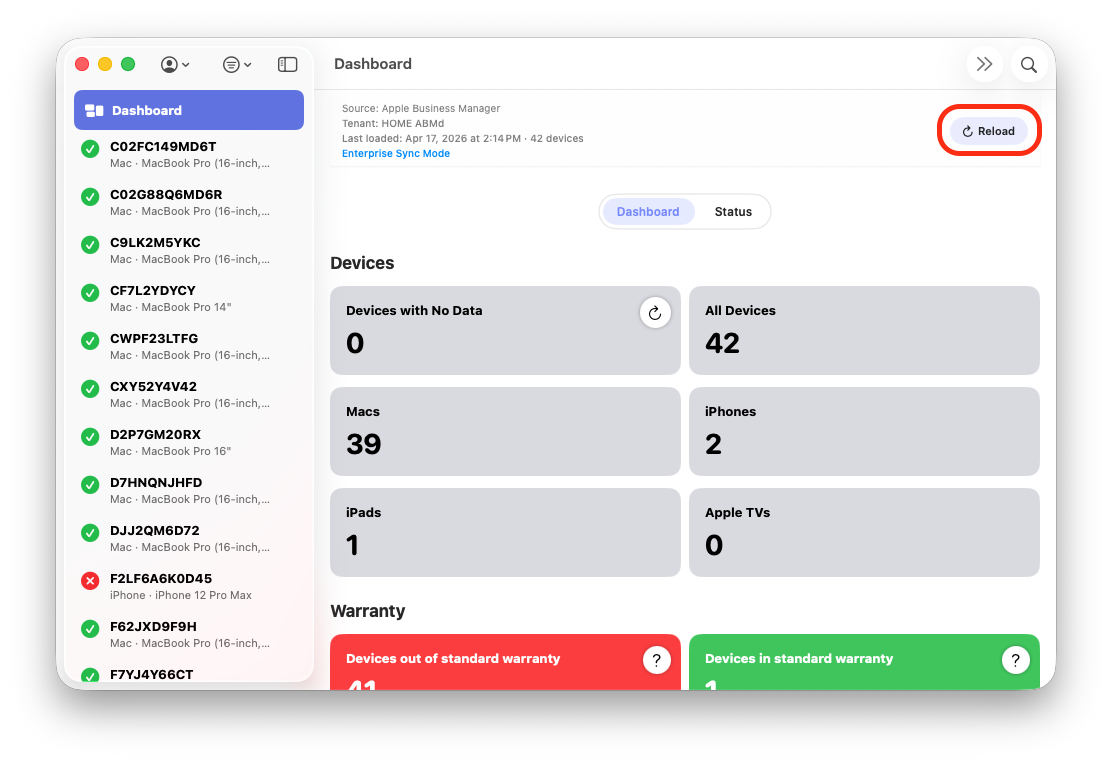
Full Sync with Update is the broadest execution path and is intended for comprehensive tenant refreshes. It reconciles the full API inventory against local state, applies inactive decisions for devices no longer present in source inventory, and then processes active workloads through chunked job execution.
This mode is best used for baseline alignment, post-maintenance verification, or periodic deep refresh cycles. It favors correctness and full-state convergence over shortest runtime, especially when fleet size is large.
Partial Sync
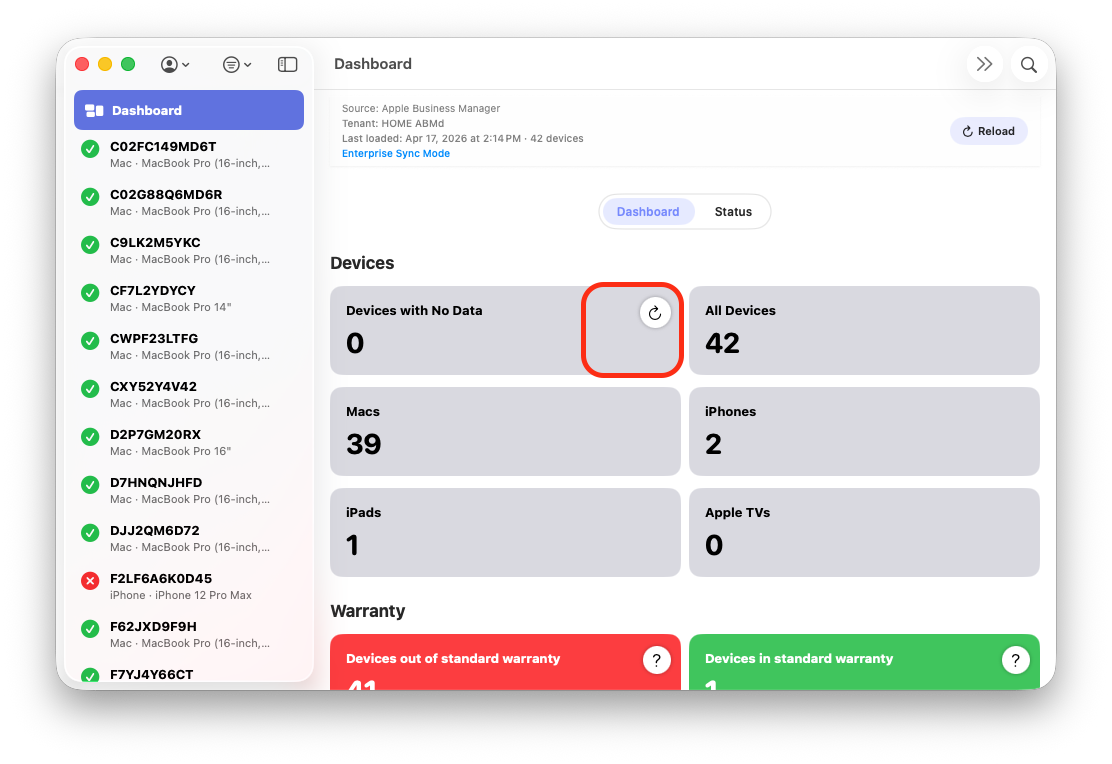
Partial Sync is a targeted recovery path for devices currently in a no-data state. It is primarily used to re-run devices that were skipped or left unfinished in prior processing windows rather than to execute a broad recurring fleet-wide cadence.
No-data states can result from cancellation/interruption, transient API or service errors, and chunk runs that did not complete cleanly end-to-end. Partial Sync focuses on reconciling that backlog so unresolved devices can be retried without rerunning a full tenant refresh.
Single Device Sync
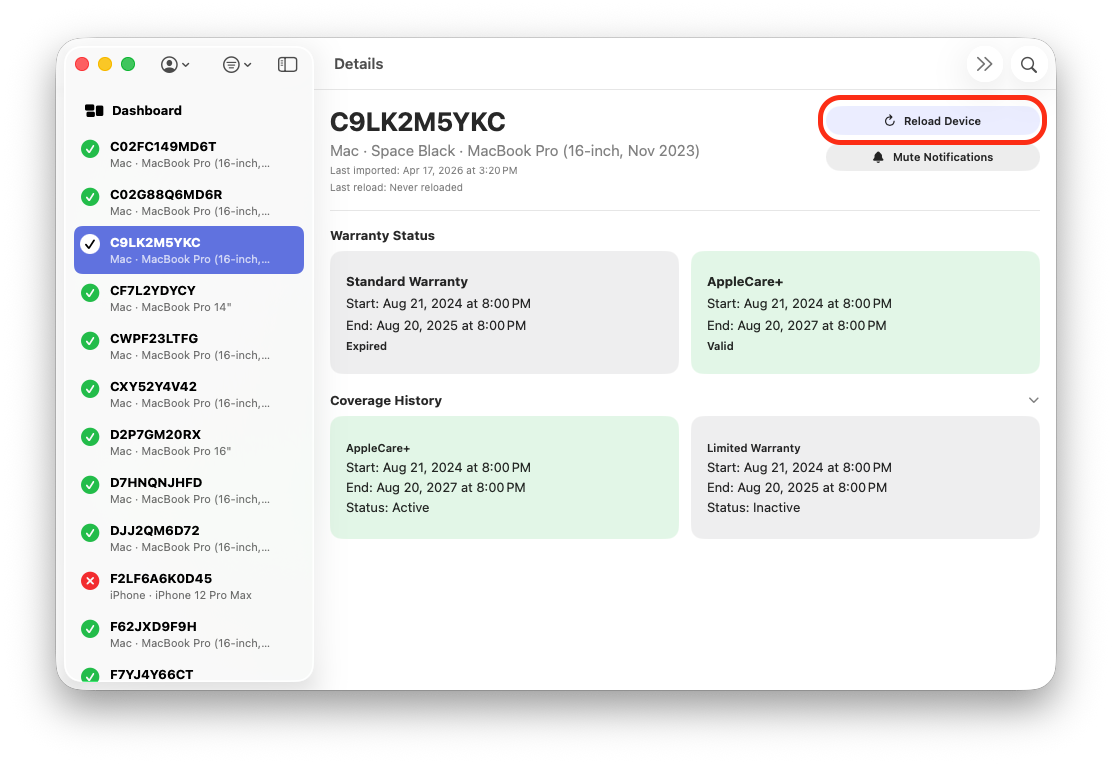
Single Device Sync is a targeted workflow for focused diagnostics and validation on a specific serial. It is designed for support and verification tasks where a single device must be checked without triggering a broader tenant run.
This mode keeps the same general orchestration pattern but limits scope to one record path, making it useful for triage, post-change checks, and repeatable support investigation steps.
How the Modes Fit Together
The three modes are not competing systems; they are execution profiles over the same core sync framework. Teams can run full for baseline, partial for cadence, and single-device for pinpoint investigations without changing the underlying data rules.
Tenant Sync Strategy
--------------------
Full Sync      -> broad reconciliation + chunked execution
Partial Sync   -> reduced-scope recurring updates
Single Device  -> one-serial targeted validation