Guide
Jobs View & Chunking
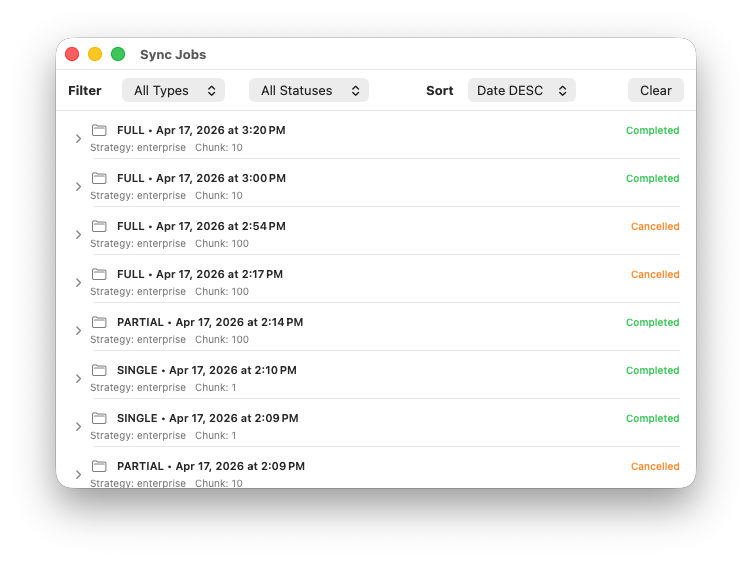
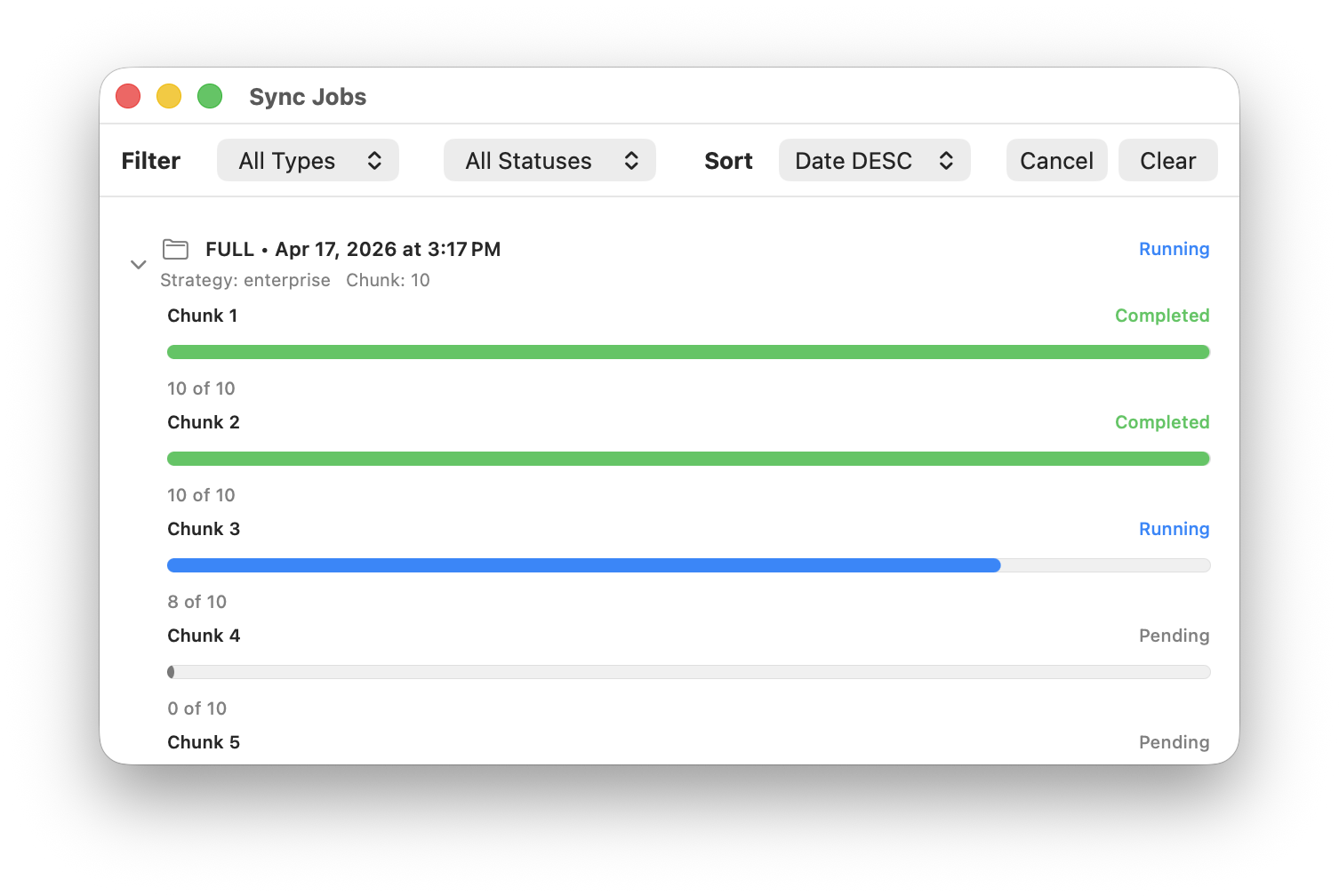
Jobs View is a dedicated operational surface for monitoring sync runs and chunk-level progress in real time. It is designed for visibility and control, especially when jobs are long-running or when multiple runs must be reviewed in sequence.
Instead of treating sync as a black box, Jobs View exposes structured status for run state, chunk progress, and completion outcomes. This helps operators answer what is running, what completed, what was interrupted, and what needs follow-up.
What Jobs View Shows
Each job reflects a planned sync workload for a tenant and sync type, and each job is broken into chunks when needed. The view is intended to make progress interpretable at both summary and detailed levels.
At a high level, this gives teams one place to inspect queued, running, completed, incomplete, cancelled, and failed outcomes without jumping between logs and dashboard summaries.
Chunking Model
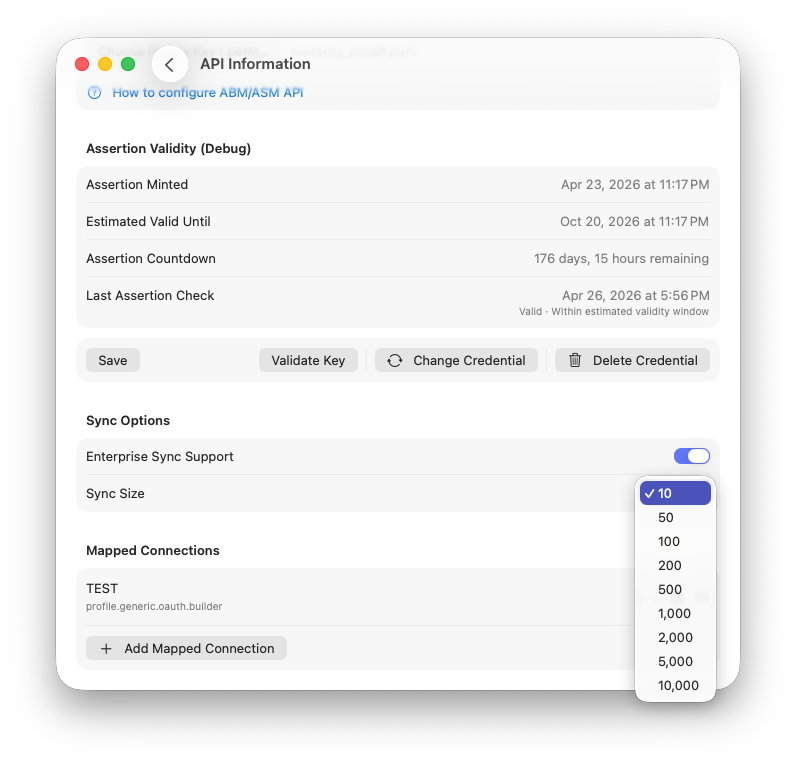
Set chunking in Settings using the Sync Size dropdown, where each value controls how much work is grouped per chunk and directly affects runtime pacing, progress granularity, and recovery behavior.
Because chunking is part of job planning, the same structure can be reused across full and partial execution paths with consistent status behavior in the Jobs View timeline.
Job
 |- Chunk 1  [completed]
 |- Chunk 2  [completed]
 |- Chunk 3  [running]
 |- Chunk 4  [pending]
Progress and Outcomes
Jobs View is intended to expose meaningful operational outcomes rather than only a single percentage. Operators can see where work completed, where it stopped, and whether cancellation or transient failure affected only a subset of chunks.
This is especially useful for enterprise-scale runs where duration, API pressure, and interruption risk are higher. Chunk-level outcomes make recovery and follow-up actions more predictable.
How to Use It Operationally
Use Jobs View to verify active run progress during execution and to review history after completion. For recurring operations, it provides a practical timeline for identifying whether the previous run finished cleanly before starting a new one.